
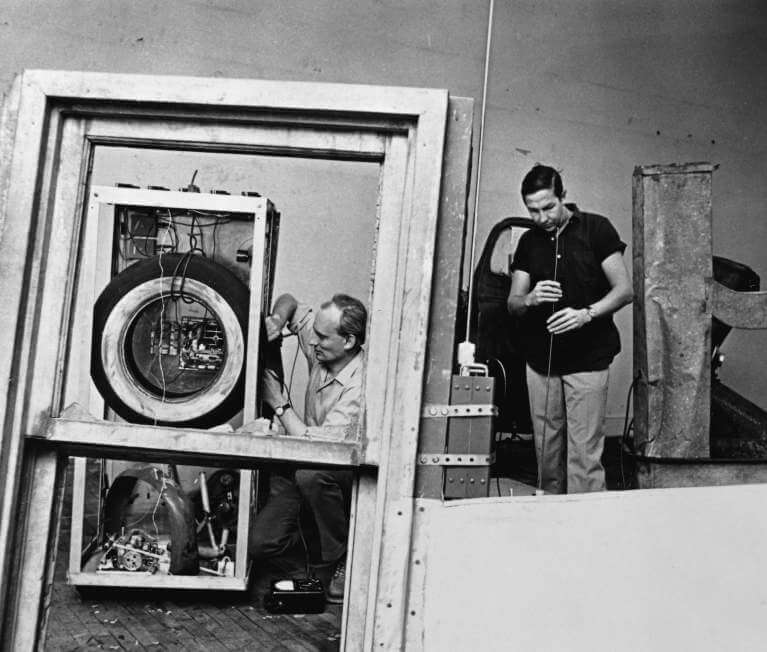
Rauschenberg (right) and the engineer Billy Klüver working on Oracle (1962–65) in the artist’s Broadway studio, New York, 1965. Photo: Larry Morris/The New York Times/Redux Pictures
Art and Technology, 1959–98
Among the collaborative ventures that brought Rauschenberg emphatically outside the confines of his studio were his experimental works combining art and technology. This interest was already evident in the early Combines that integrated working appliances such as radios, fans, electric lights, and clocks, allowing sound, motion, light, and the passage of time to be incorporated quite literally into his art.
Through his participation in the Swiss artist Jean Tinguely’s kinetic environment and performance Homage to New York in 1960, Rauschenberg began working with Billy Klüver, a research scientist at Bell Laboratories. In collaboration with Klüver, Rauschenberg realized some of his most ambitious technological works, including the sound-producing sculptural environment Oracle (1962–65) and Soundings (1968), a monumental light installation responsive to ambient sound. Both works were meant to be experienced by the audience in space and to appeal to the senses beyond the purely visual.
In 1966, Rauschenberg and Klüver, together with the artist Robert Whitman and the engineer Fred Waldhauer, founded Experiments in Art and Technology (E.A.T.), a nonprofit organization that sought to make technology accessible to artists by arranging collaborations with engineers. In the same year, as an expression of its founders’ interest in the potential applications of technology for theater, E.A.T. produced “9 Evenings: Theatre & Engineering,” which brought together visual artists, dancers, choreographers, scientists, and engineers and resulted in technologically sophisticated performance works.
While Rauschenberg’s preoccupation with technology-based art reached its height during the 1960s, the artist would continue to periodically utilize technology in his art making through the 1990s. Among his later technology-based works was the series Eco-Echo (1992–93). Made following his attendance at the Earth Summit (officially, United Nations Conference on Environment and Development [UNCED]) in Rio de Janeiro in June 1992, the sonar-activated, windmill-like sculptures referred to the artist’s environmental concerns and his interest in cultivating ecologically responsible sources of power.
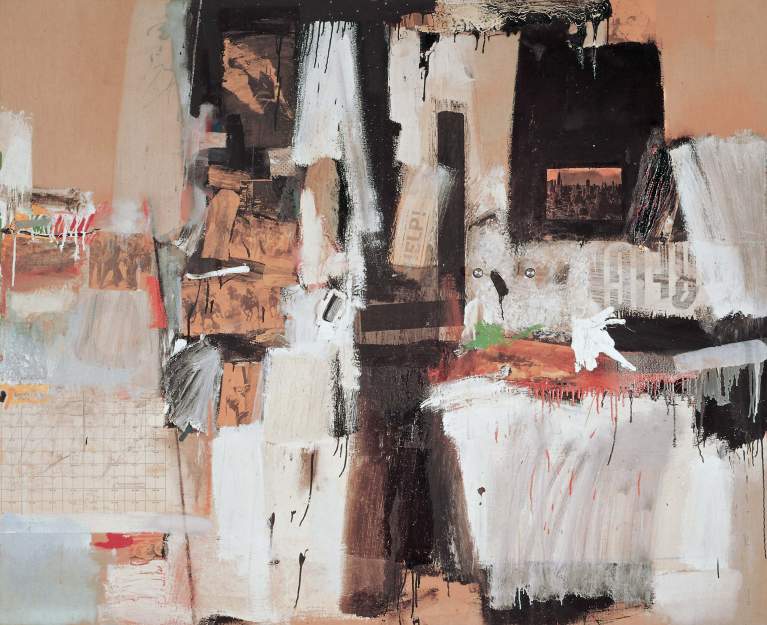
Broadcast, 1959
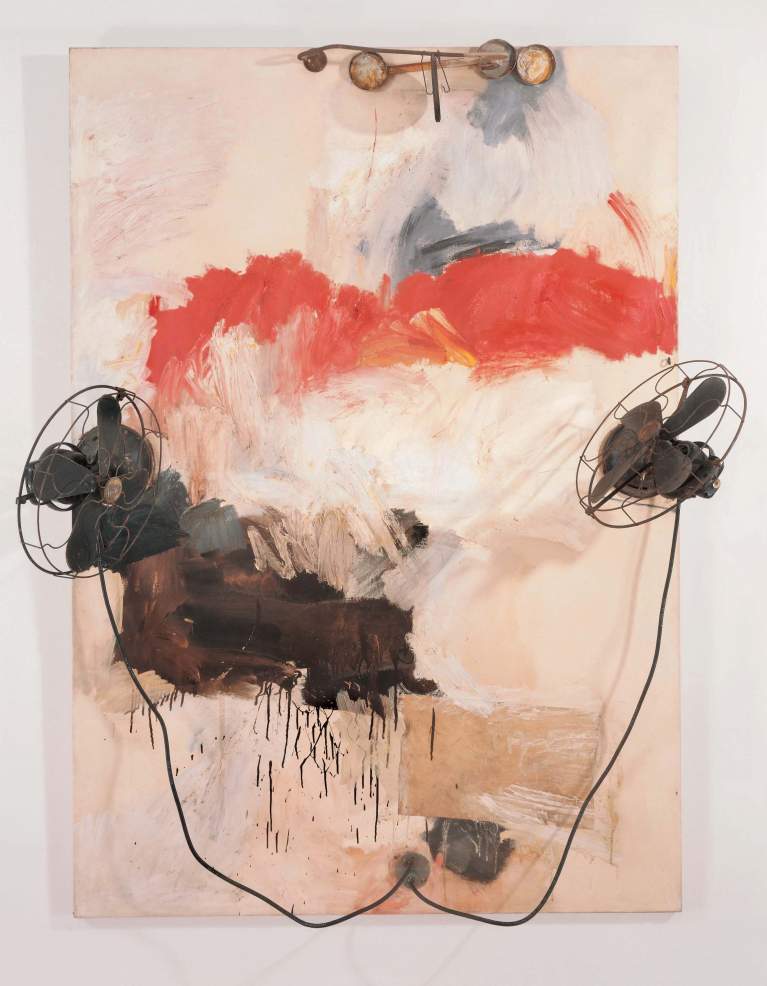
Pantomime, 1961
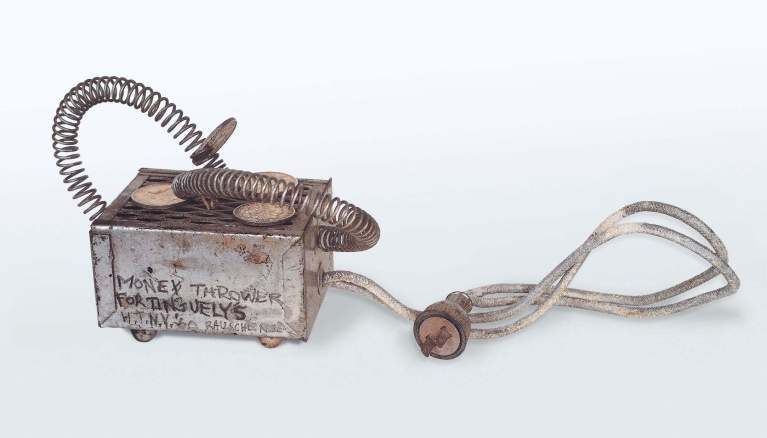
Money Thrower For Tinguely’s H.T.N.Y., 1960
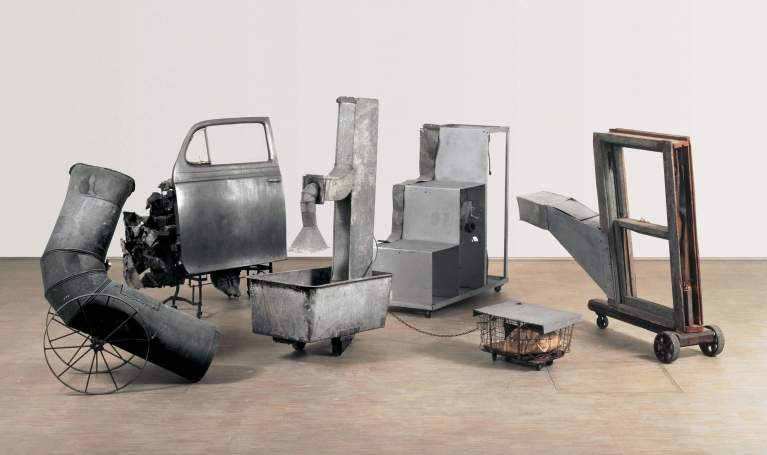
Oracle, 1962–65
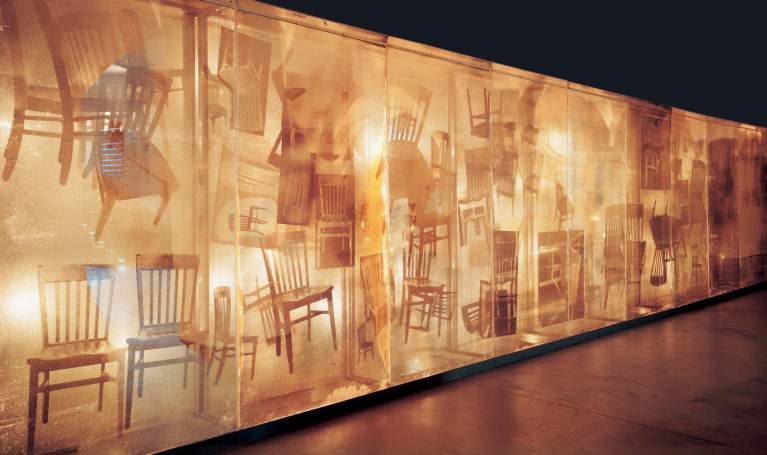
Soundings, 1968
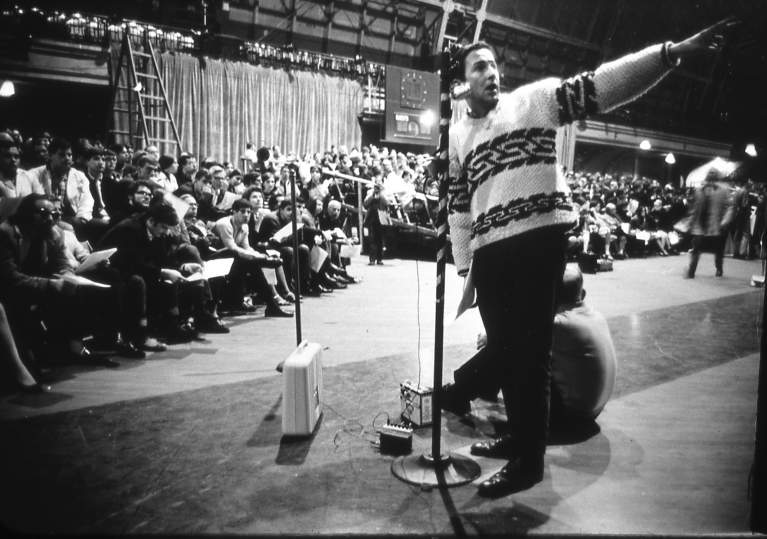
Rauschenberg giving instructions for Open Score (1966) for 9 Evenings: Theatre and Engineering, 69th Regiment Armory, New York, October 1966. Photo: Peter Moore © Barbara Moore/Licensed by VAGA, New York, courtesy Paula Cooper Gallery, New York
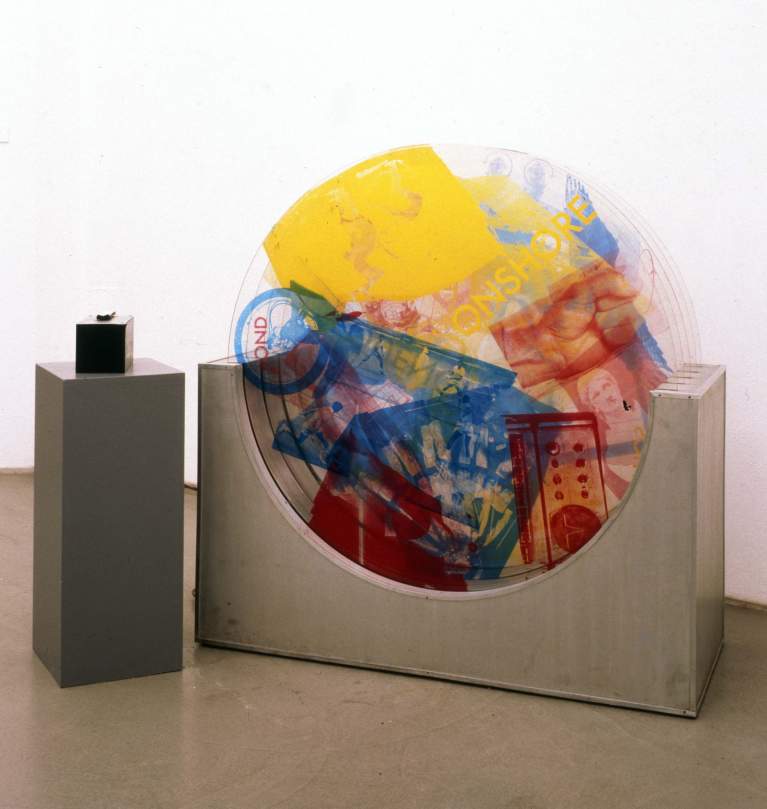
Revolver IV, 1967
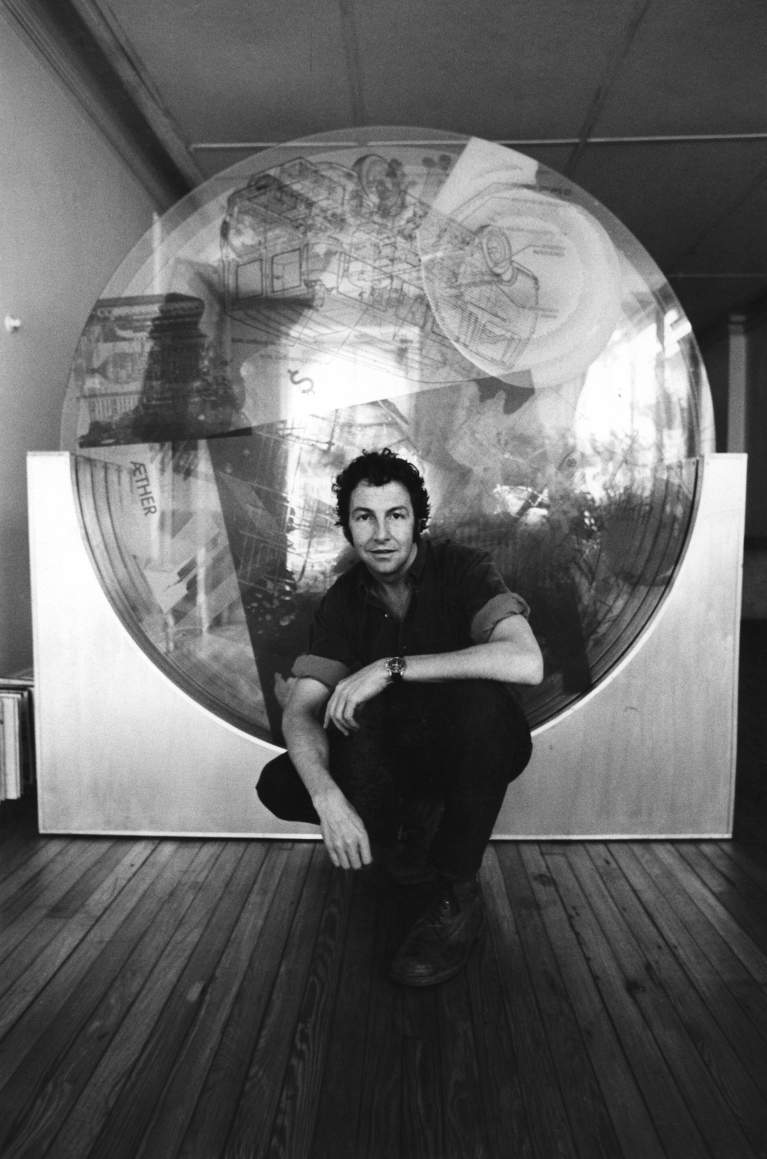
Rauschenberg kneeling before Revolver VI (1967) in his Lafayette Street studio, New York, ca. 1967. Photo: Maurice Hogenboom
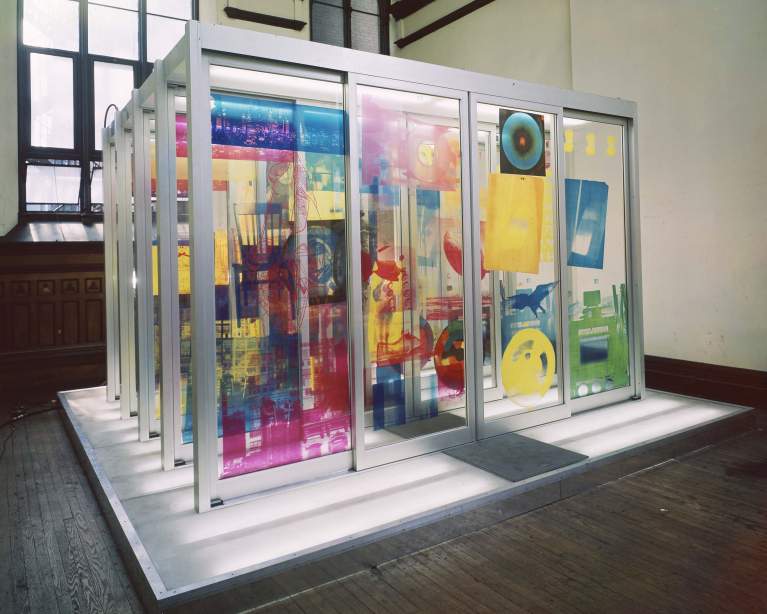
Solstice, 1968
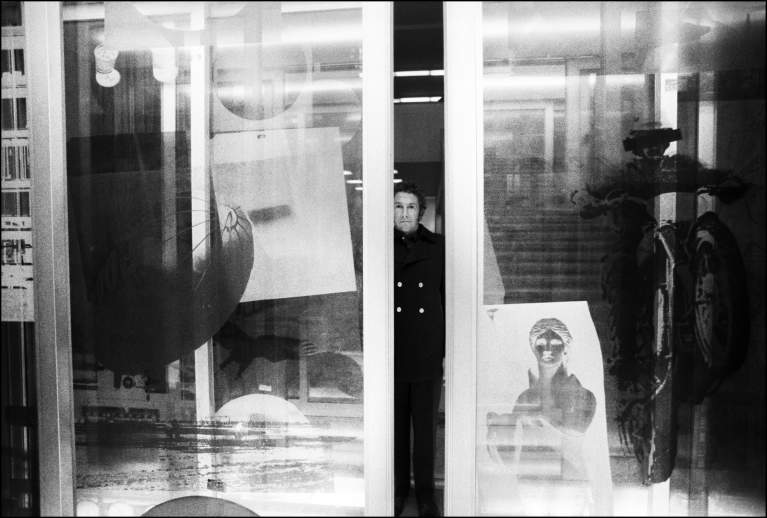
Rauschenberg standing behind partially open doors of Solstice (1968) at Robert Rauschenberg: Œuvres de 1949 à 1968, Musée d’Art Moderne de la Ville de Paris, fall 1968. Photo: Ugo Mulas © Ugo Mulas Heirs