
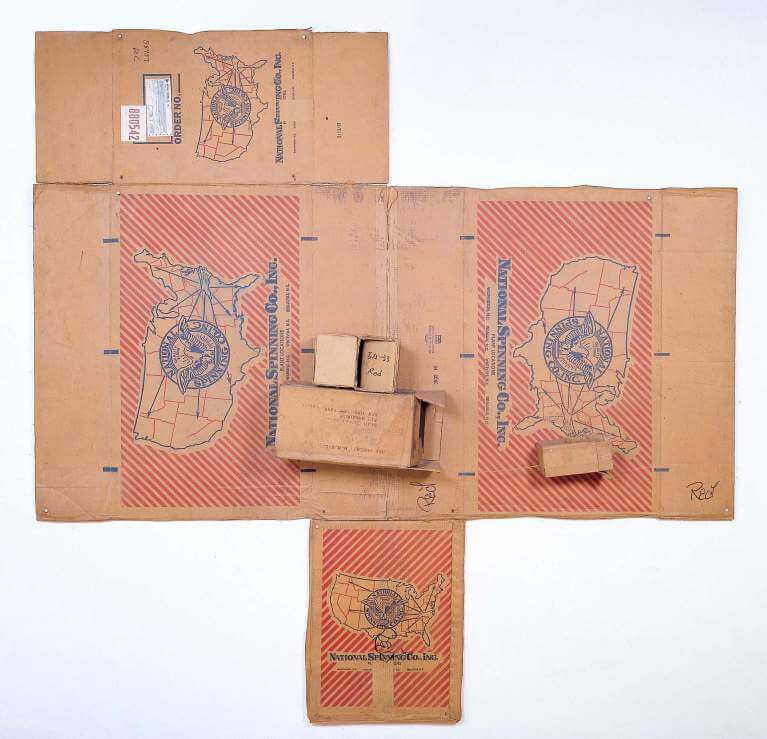
National Spinning/Red/Spring (Cardboard), 1971
Mid-Career, 1970s–1980s
With his move in 1970 from New York to Captiva, an island off the Gulf Coast of Florida, Rauschenberg cleared his palette. Retreating from urban imagery, he began to favor a more abstract idiom and the use of natural fibers, such as textiles and paper. The Cardboards (1971–72) and the Venetians (1972–73) reveal his fascination with the inherent color, texture, and history of found materials. The beautiful and disparate effects of fabric, ranging from cotton to satin, are explored in the Hoarfrosts (1974–76) and the Jammers (1975–76). Collaborations with paper mills in France and India resulted in works in which paper pulp itself was elevated to an art form.
A midcareer retrospective was mounted by the National Collection of Fine Arts (now Smithsonian American Art Museum), Smithsonian Institution, Washington, D.C., in 1976, when Rauschenberg was selected as the artist best suited to honor the country’s bicentennial. Having the opportunity to reexamine his early work, Rauschenberg returned to past concerns. His Spreads (1975–83) and Scales (1977–81) incorporate transferred and screened images as well as assemblage, sometimes in room-sized installations.
During the 1980s, Rauschenberg undertook two long-term projects. The first, The 1/4 Mile or 2 Furlong Piece, was begun in 1981 and completed in 1998. The multipart work consists of 191 components and spans even further than the quarter mile of its title. Retrospective in character, the work is replete with references to Rauschenberg’s life and art.
The second project, the Rauschenberg Overseas Culture Interchange (ROCI), was the most tangible expression of Rauschenberg’s belief in the power of art and artistic collaboration to bring about social change. Traveling around the world with ROCI, Rauschenberg explored diverse cultures and local art-making practices, giving rise to an extraordinarily diverse body of work. As an example, in Chile for ROCI in 1985, the artist painted and screened on copper; that experience led, over the next decade, to his use of metal as a support for paint, patinas, enamel, and screenprinted images in series such as Urban Bourbons (1988–96) and Night Shades (1991). The Gluts, begun in 1986, were made from pieces of scrap metal, such as gas-station signs and automobile parts, whose original identities were often masked when they were transformed into wall-hung and freestanding sculptures.

Rauschenberg’s dogs Kid and Laika on the floor of the Beach House in front of Tropicana Channel (Cardboard) (1971), Captiva, Fla., 1971

Sor Aqua (Venetian), 1973

Untitled (Hoarfrost), 1975
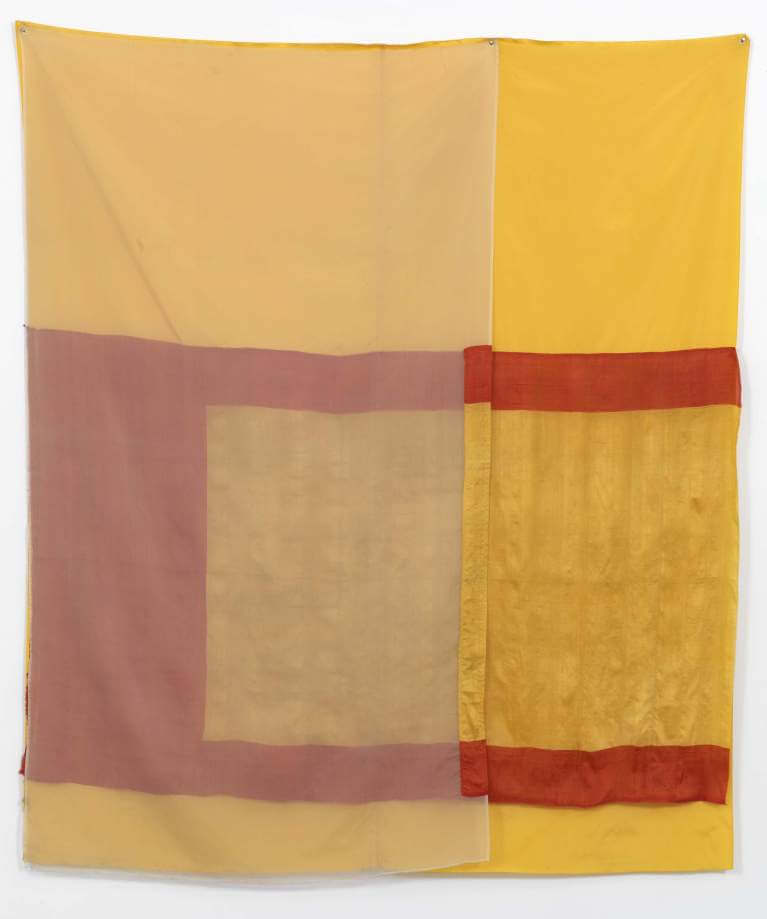
Mirage (Jammer), 1975

Rodeo Palace (Spread), 1975–76

Mango Ice Cave (Scale), 1977
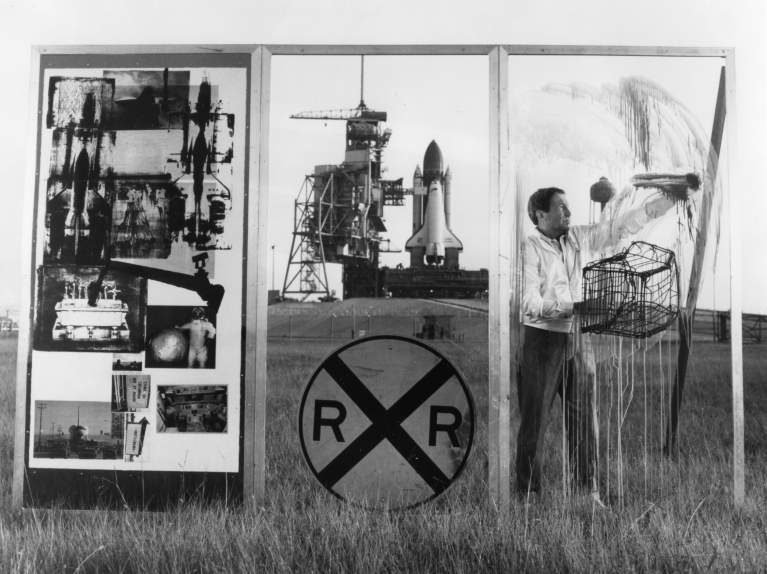
Rauschenberg working on his portrayal of the space shuttle Discovery, Cape Canaveral, Fla., August 1984. Photo: Theo Westenberger Archives, 1974–2008, Autry National Center, Los Angeles
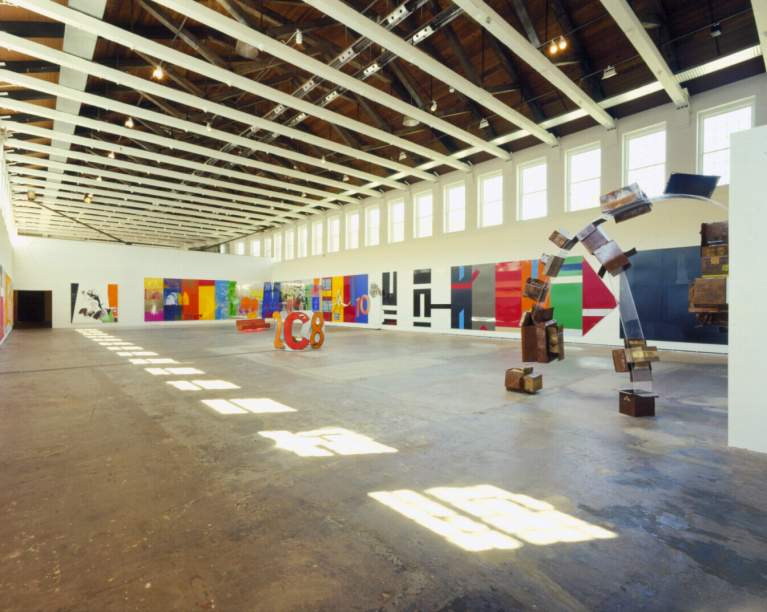
The 1/4 Mile or 2 Furlong Piece (1981–98) on view at the inaugural exhibition of the Massachusetts Museum of Contemporary Art (MASS MoCA), North Adams, Mass., 1999. Photo: Nicholas Whitman, nwphoto.com, courtesy MASS MoCA
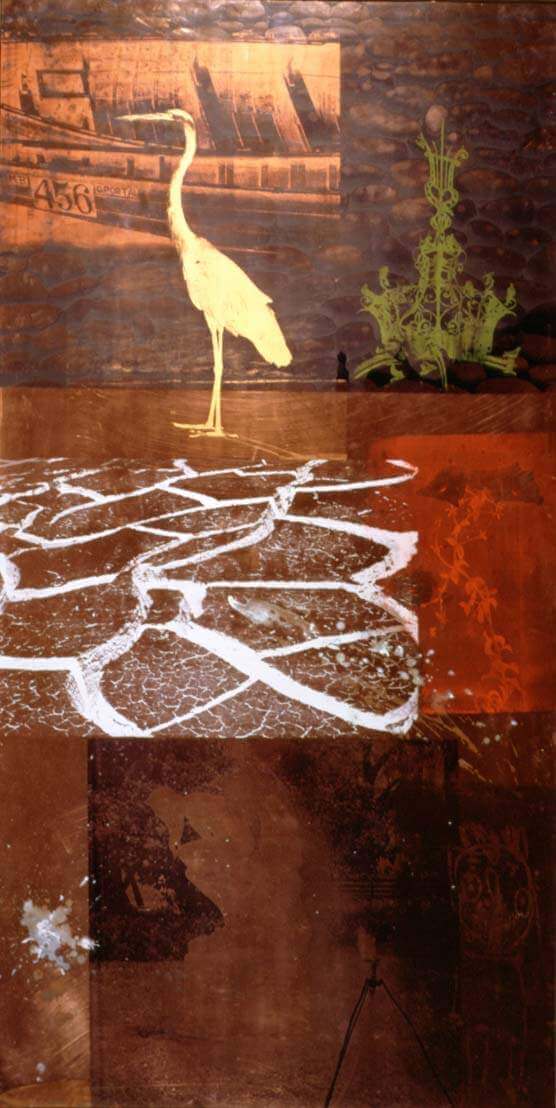
Copperhead-Bite VI/ROCI CHILE, 1985

Courtyard (Urban Bourbon), 1989

Intersection (Night Shade), 1991

Greek Toy Glut (Neapolitan), 1987
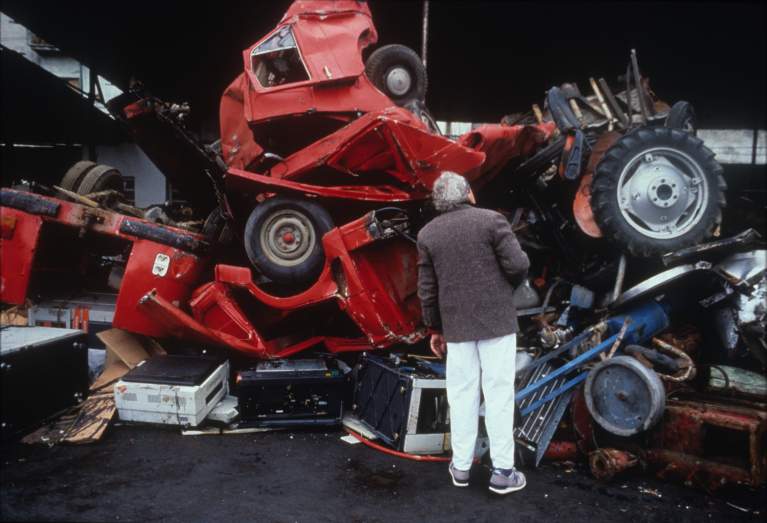
Rauschenberg looking for source material for his Glut series in a junkyard, Naples, Italy, December 1986. Photo: Peppe Avallone