

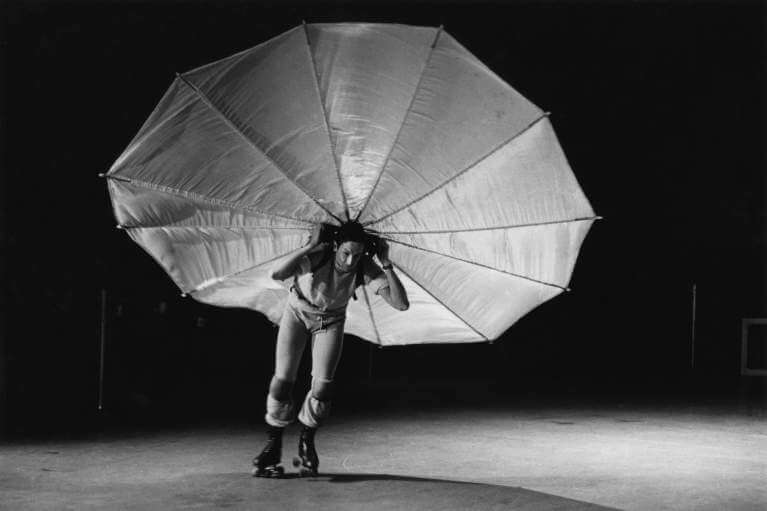
Rauschenberg performing his work Pelican (1963) as part of First New York Theater Rally, Broadway and 81st Street (former CBS Studio 72), New York, May 1965. Photo: Peter Moore © Barbara Moore/Licensed by VAGA, New York, courtesy Paula Cooper Gallery, New York
Performance, Choreography, and Stage Design, 1952–2007
Performance, in its many manifestations, was at the core of much of Rauschenberg’s artistic output. His involvement with performance began at Black Mountain College, North Carolina, where he danced in student productions and, in August 1952, participated in the composer John Cage’s Theater Piece No. 1 (an originally untitled work that is often referred to as the first Happening). Throughout his career, Rauschenberg not only designed sets, costumes, and lighting for Merce Cunningham and other choreographers such as Trisha Brown and Paul Taylor but also choreographed and performed his own works. Moreover, theatrical elements are often integral to his nonperformance works, such as a sculpture that incorporates a hidden sound (Music Box, 1953); a Combine that includes a working clock (Third Time Painting, 1961); and a technology work that churns mud (Mud Muse, 1968–71).
Indeed, Rauschenberg often intentionally blurred the lines between his performance work and his work in other media. For example, a freestanding Combine, Minutiae (1954), was created as a stage set for a Merce Cunningham Dance Company performance, while First Time Painting (1961), another Combine, was made by the artist while on stage at the United States Embassy’s theater in Paris as part of the performance Homage to David Tudor, which also included Jasper Johns, Niki de Saint-Phalle, Jean Tinguely, and the composer Tudor himself. When on tour with Cunningham, Rauschenberg frequently created scenery by spontaneously assimilating found objects and sounds, as he developed the concept of “live décor,” or scenery generated by human activity.
Rauschenberg’s artistic dialogue with Cage and Cunningham positioned the artist at the cutting edge of postmodern dance. His involvement in the early 1960s with Judson Dance Theater, New York, an experimental collective that included dancers as well as visual artists, resulted in performances free of narrative, emphasizing instead the purity of movement—sometimes conventionally dance-like, sometimes more mundane, allowing untrained performers to participate alongside professional dancers. Throughout his career, Rauschenberg found collaboration to be a productive means for pushing the boundaries of conventional art making.
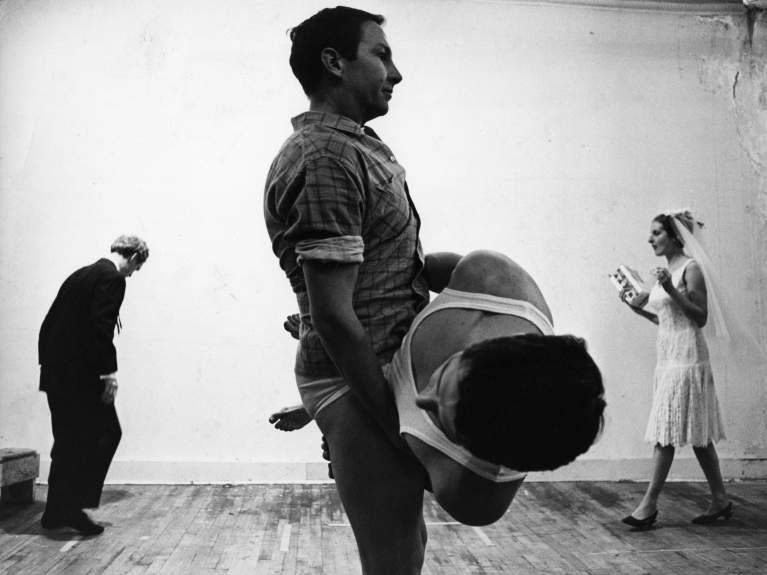
Rehearsal for Rauschenberg’s Spring Training (1965) in his Broadway studio, New York, 1965. Pictured: Alex Hay, Rauschenberg carrying Steve Paxton, and Trisha Brown. Photo: Ugo Mulas © Ugo Mulas Heirs
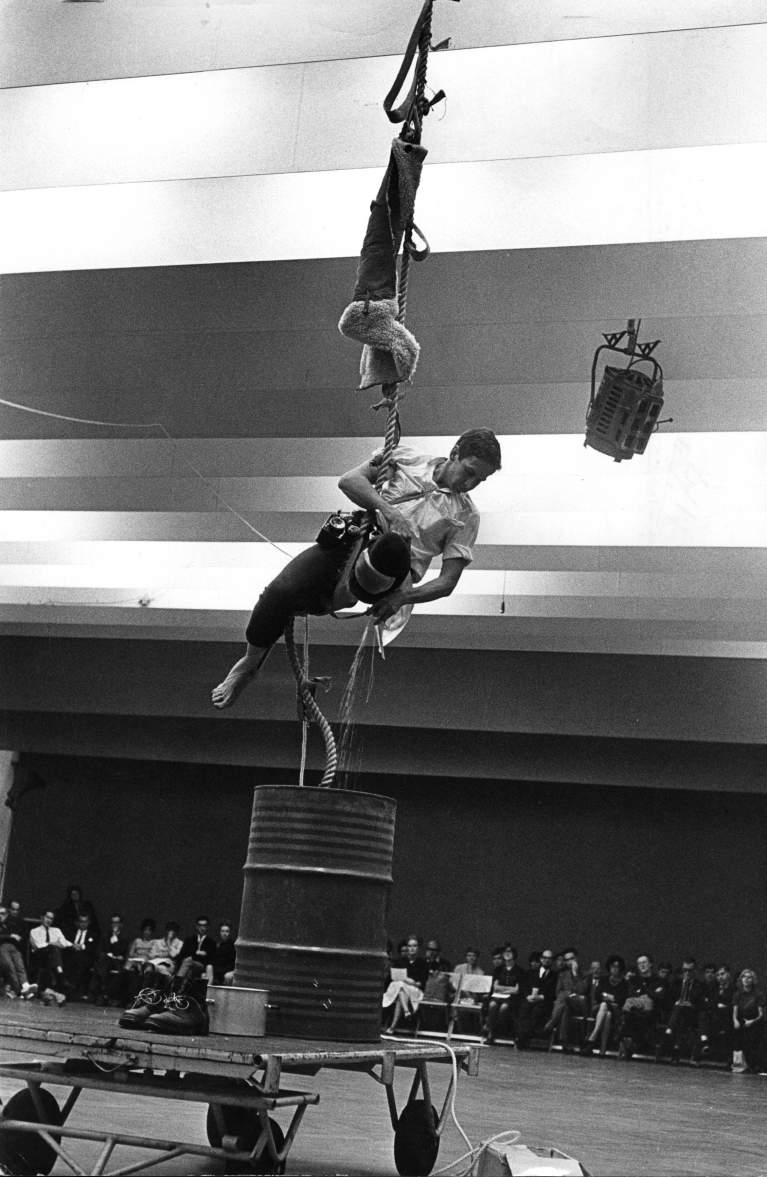
Rauschenberg performing his work Elgin Tie (1964) as part of 5 New York Kvällar (5 New York Evenings), Moderna Museet, Stockholm, September 13, 1964. Photo: Hans Malmberg
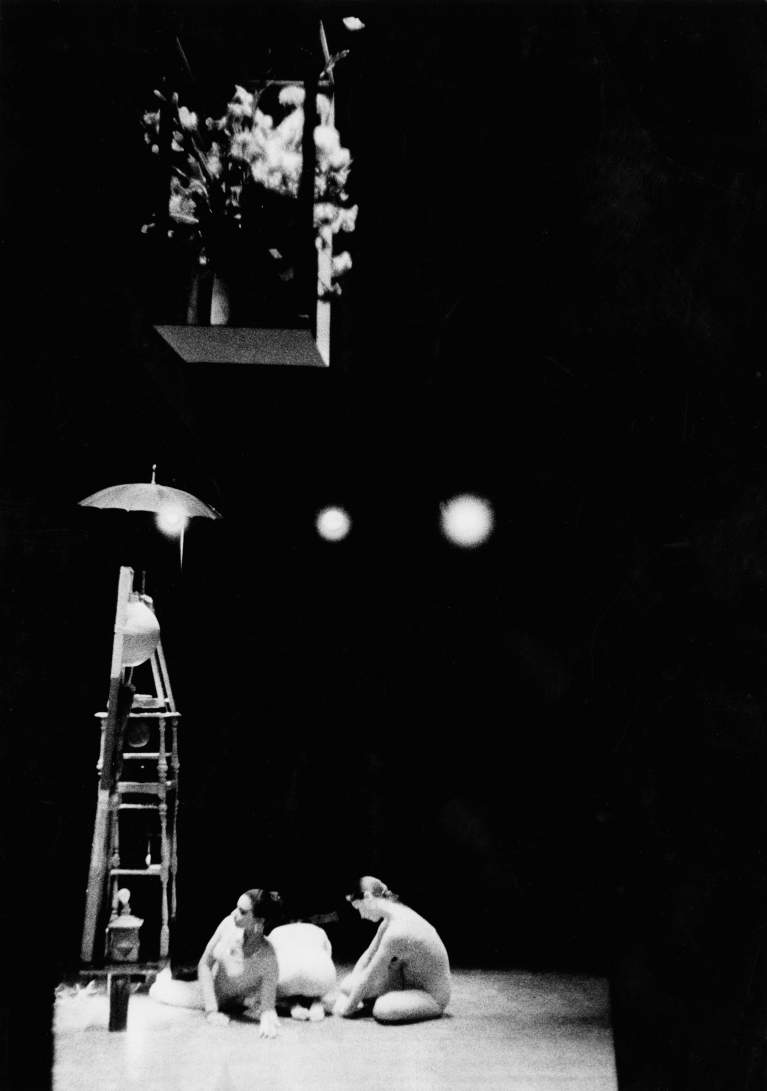
Set by Rauschenberg for Paul Taylor Dance Company’s The Tower (1957). Pictured: Carol Rubenstein, Matt Turney, and Barbara Janezic. Photo: Louis Stevenson
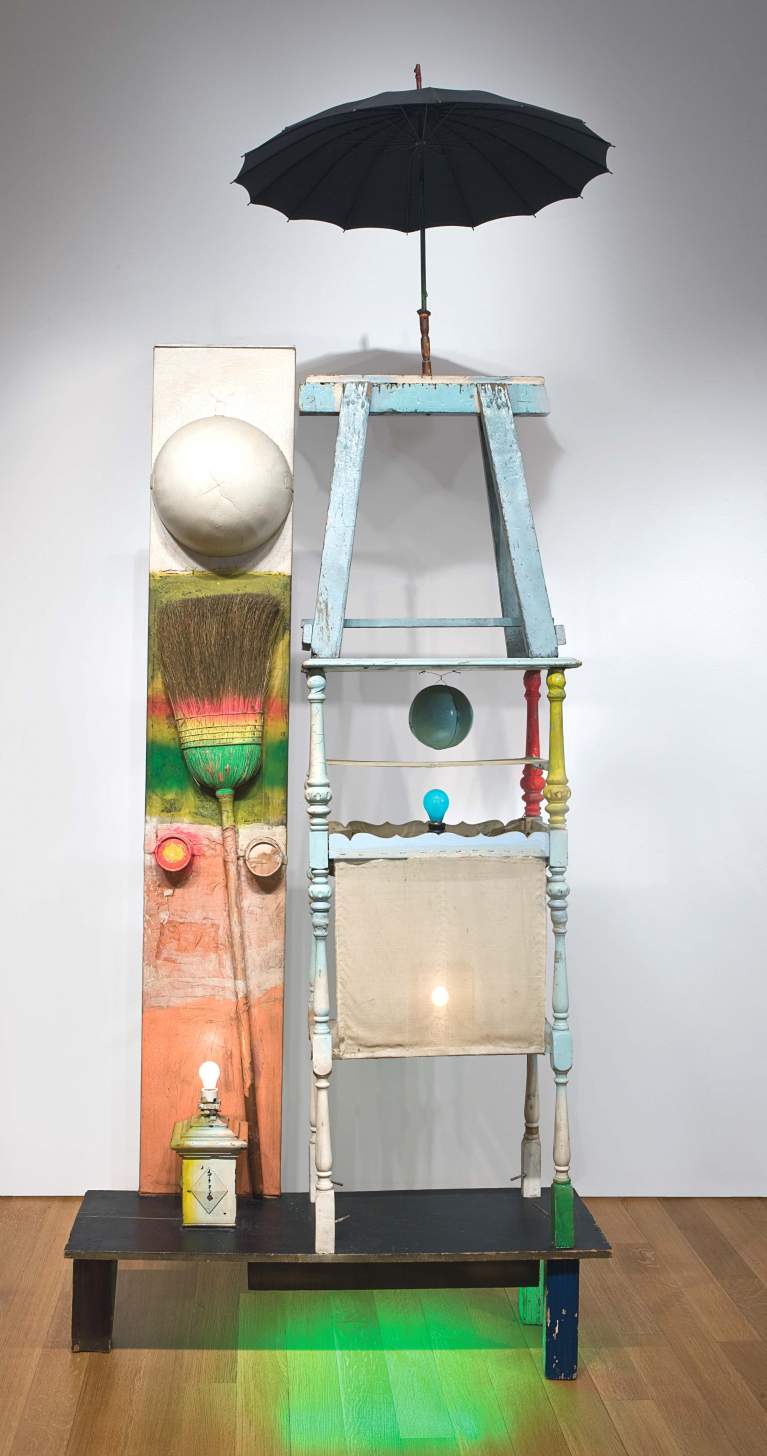
The Tower, 1957
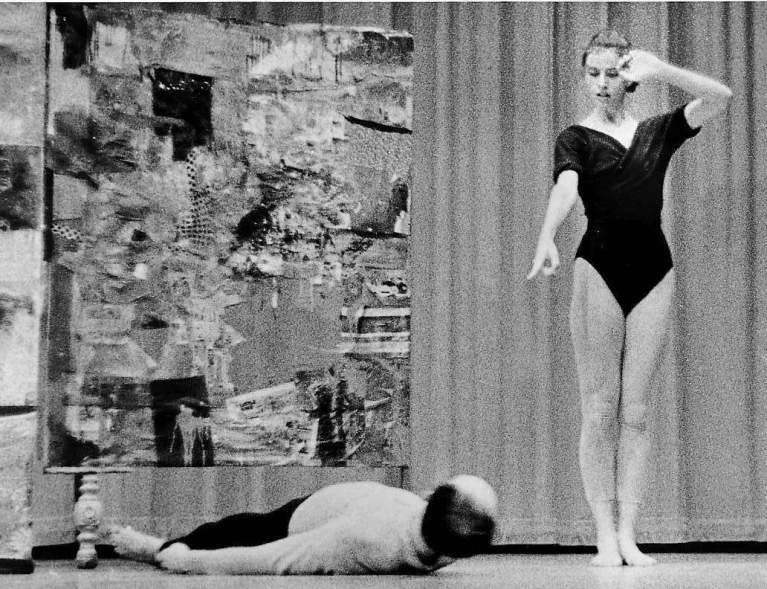
Set by Rauschenberg for Merce Cunningham Dance Company’s Minutiae (1954). Pictured: Remy Charlip and Anita Dencks. Photo: Louis Stevenson
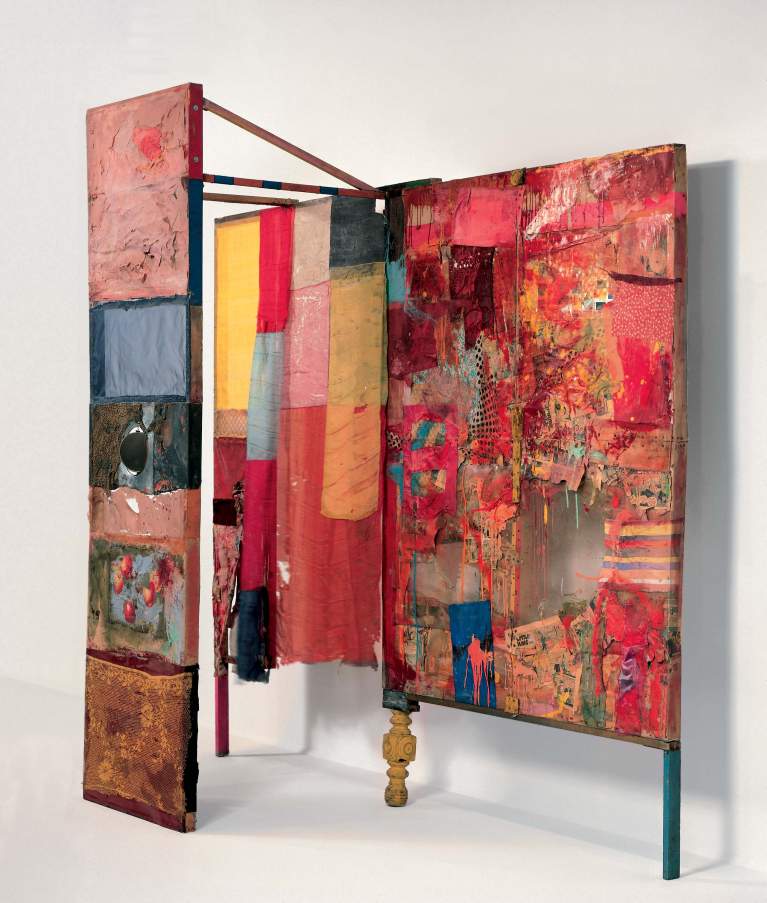
Minutiae, 1954
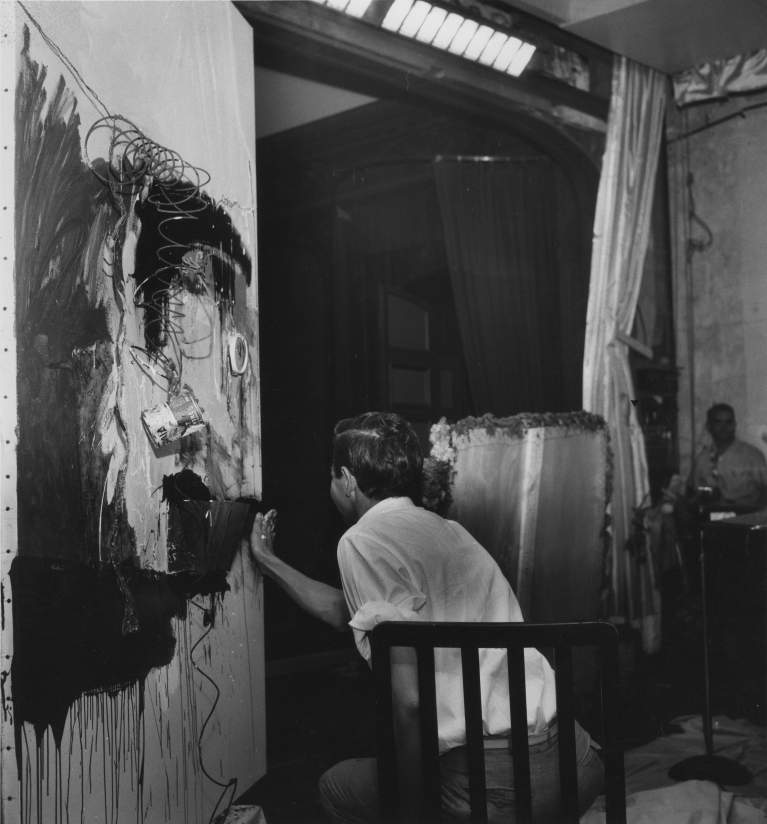
Rauschenberg creating First Time Painting (1961) during Homage to David Tudor, Théâtre de l’Ambassade des États-Unis, Paris, June 20, 1961. Photo: Shunk-Kender © J. Paul Getty Trust
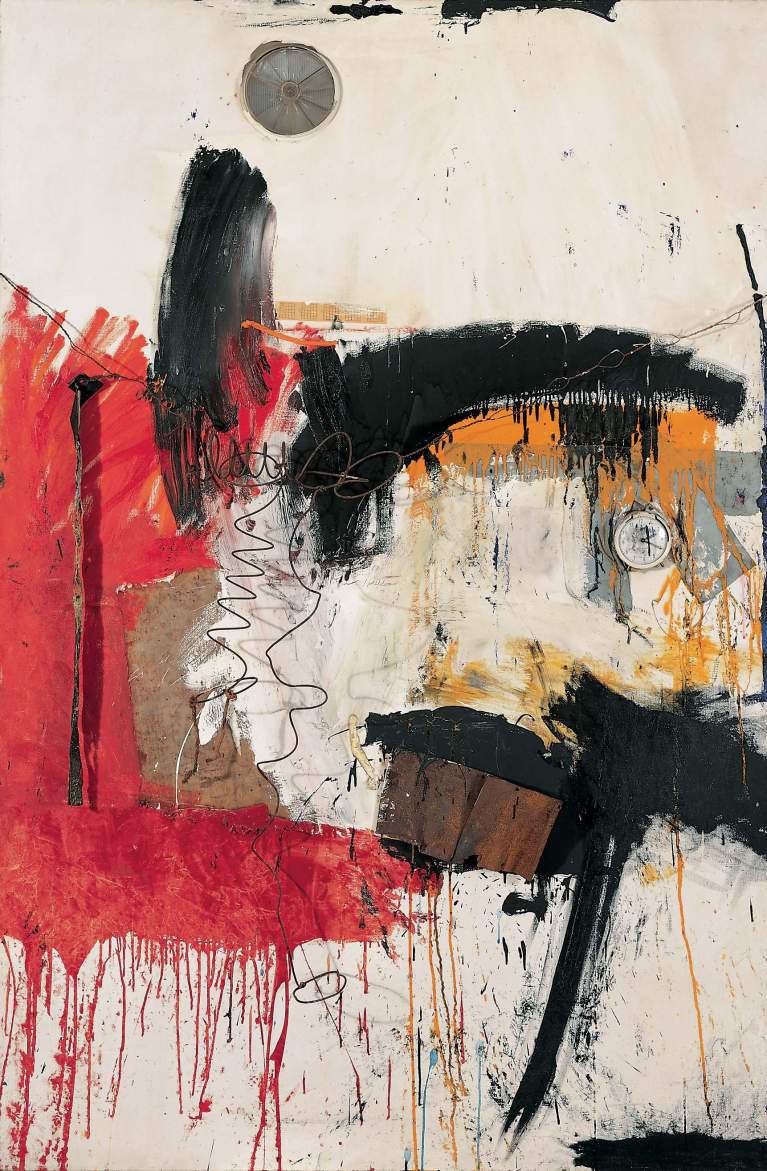
First Time Painting, 1961
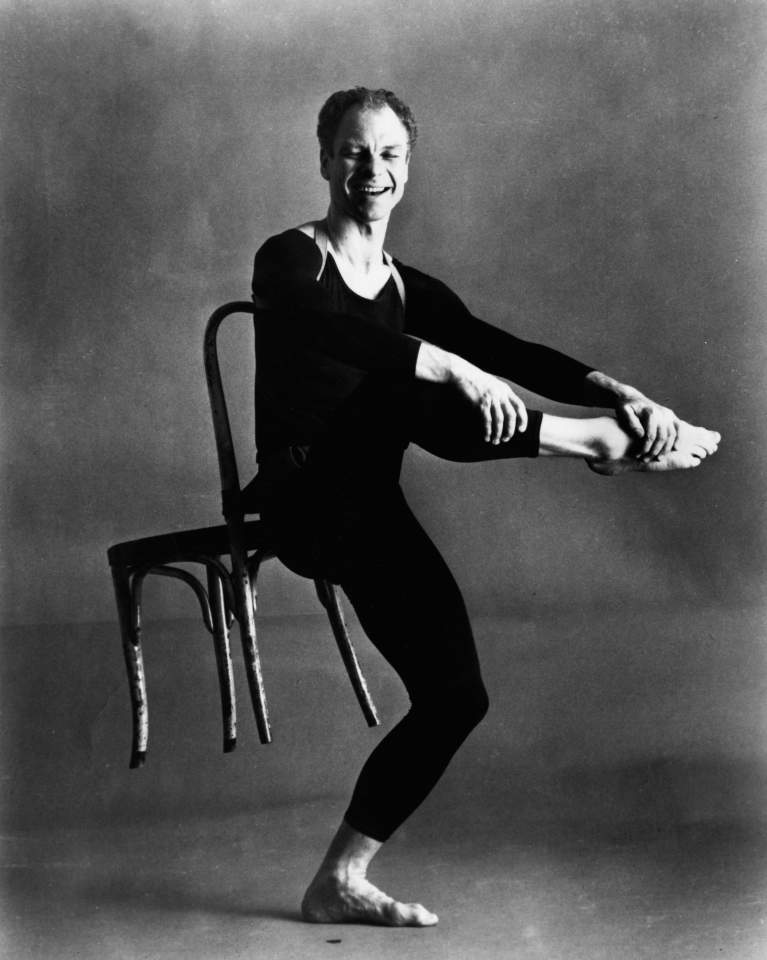
Merce Cunningham wearing a costume designed by Rauschenberg for Merce Cunningham Dance Company’s Antic Meet (1958). Production still: Richard Rutledge
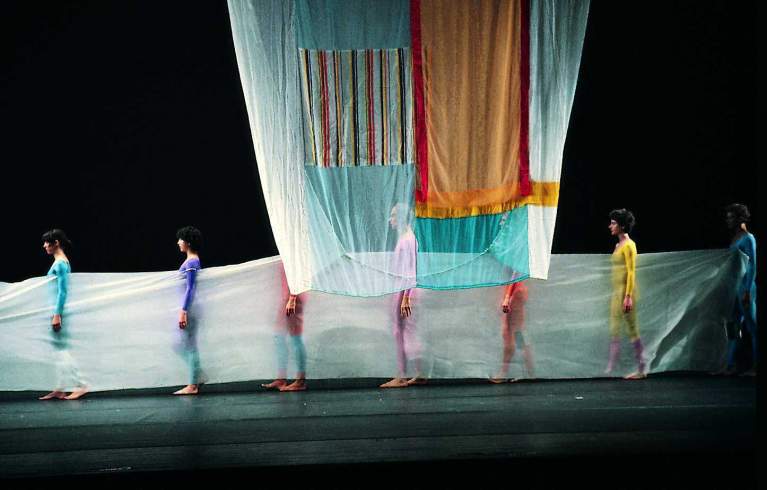
Costumes and set (entitled Tantric Geography) by Rauschenberg for Merce Cunningham Dance Company’s Travelogue (1977). Photo: Charles Atlas
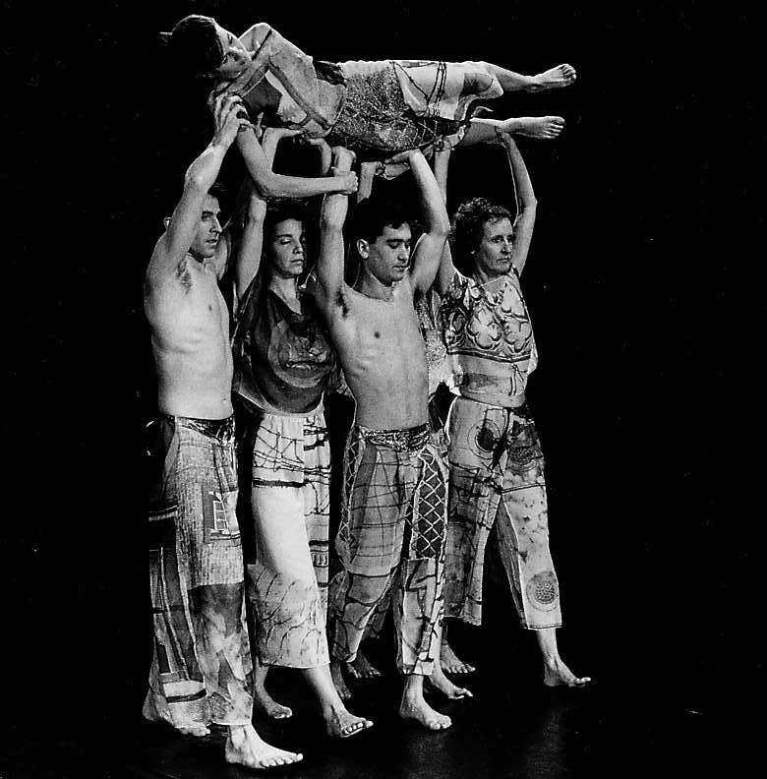
Set, costumes, and lighting by Rauschenberg for Trisha Brown Dance Company’s Set and Reset (1983). Pictured: Stephen Petronio, Vicki Shick, Randy Warshaw, and Trisha Brown carrying Diane Madden. Photo: © Beatriz Schiller
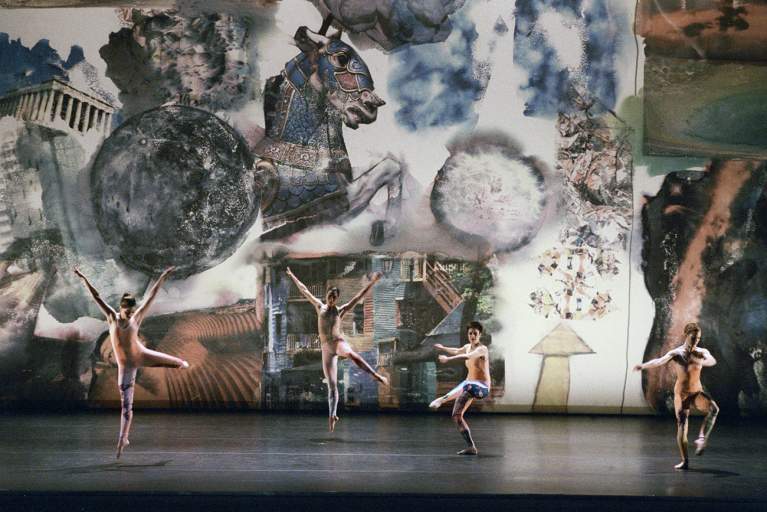
Set and costumes designed by Rauschenberg for Merce Cunningham Dance Company’s Interscape (2000). Pictured: Jeannie Steele, Derry Swan, Maydelle Fason, and Holley Farmer. Photo: Ed Chappell